Welcome to the Home Services Dispatch. Read the Founding Letter for an overview of what you can expect each week.
In Brief
Harris Williams data shows 79% of homeowners prefer hiring local. For most PE-backed roll-ups, that's a serious problem. This week's commentary breaks down how other businesses have solved this problem, and lays out a tactical playbook for platform operators to do the same.
HVAC owners heading into a private equity sale have more leverage over culture and terms than the standard framing suggests. Meanwhile, more contractors are selling HVAC as a subscription, trading upfront equipment margin for a decade of recurring service revenue.
Advantage Services Group entered Virginia with Brooks Heating & Air in Manassas, and APHIX entered Nashville with Sunrise of Nashville, both sellers keeping existing leadership. Royalty Roofing, backed by Six Pillars Partners, closed on Rodd Roofing of St. Johnsbury, Vermont on June 30, with Generational Group advising the seller.
Commentary
Seventy-nine percent of consumers prefer hiring local companies for home services.
That number comes from Harris Williams' 2025 Home Services Consumer Study. A survey of over 1,000 homeowners. Published January 2026. Not an advocacy group. Not a trade association. An investment bank. The same investment bank that advises PE firms on home services M&A.
Their own data says consumers prefer local. Four out of five.
The same study found that 96% say brand matters when hiring a provider. Those two forces should compound growth. In most PE-backed roll-ups, they compete with each other.
When it comes to consolidating home service companies, private equity's thesis is that scale equals advantage. Buying power. National marketing strategy. Operational sophistication. Economies of scale. Those advantages are real. But the moment a consumer detects they're dealing with a national company and not a local operation, the advantages dissolve. The customer senses they're a number to be optimized for and oversold to. They're unsurprised to learn their technician has driven in from three counties over. The customer immediately grasps that this is a business transaction with an impersonal entity. Not one that will create a lasting, trusting relationship with a local company they will happily refer to their friends and neighbors.
Interestingly, the Harris Williams data also indicates that we are approaching an all-time high for home services demand. Who is going to get the call from this increased demand? 79% of the time, homeowners will opt to do business with a local operation. The operators of your platform should be very concerned.
Your roll-up's biggest liability isn't debt. It's that consumers don't think you're local.
Every business you acquired was built on local trust. It was foundational to the previous owner's success. They delivered high levels of customer service, which generated referrals and repeat customers. Their technicians were often local guys and were immediately relatable to the homeowners they served. Whether you knew it or not, you were paying for that hard-earned local reputation and trust equity when you signed the LOI.
After the acquisition came the rebrand. New trucks. New uniforms. New software. New polished website. Much of the local identity, ways of doing business, and connections were lost. Local customers became skeptical that they would receive the same level of service they had from the prior ownership.
This is a major issue for national brands and scaling roll-ups. And most are simply ignoring the problem. Fortunately, there's a solution. Implementation isn't easy, but if you're looking to grow, facing the problem head on is mandatory. Two companies have done it masterfully. One from our sector. One outside. Local identity and national scale don't have to be competing priorities. They can complement each other and compound growth.
Allstate, the $64 billion insurance juggernaut, competes against Geico, Progressive, and every discount insurer spending hundreds of millions on national ad campaigns. Allstate's answer wasn't a bigger national ad budget. It was to hyperlocalize its infrastructure. Currently 11,500 exclusive agents run Allstate storefronts across the country. Each agent owns their book of business. Each has their own Google Business Profile, their own Facebook page, their own Yelp listing, and a localized website with testimonials from people in their specific market. A homeowner in Dearborn doesn't call Allstate. They call Dave at the office on Michigan Avenue. Dave sponsors a local high school booster club. He has an ad in the church bulletin. He coaches CYO baseball and basketball. He has had a physical office on that street for fourteen years.
Comfort Systems USA is a multi-billion dollar HVAC contractor (NYSE $FIX ( ▼ 7.38% ) ). They operate 47 business units across 178 locations. When Comfort Systems acquires a company, as a rule, they retain the local brand name. They retain local leadership. And by extension, they preserve the local trust the business has earned over decades. This isn't a small acquisition courtesy. It's an intentional operating strategy, and a proven model for a company doing more than $7 billion in revenue.
Both prove that scale and local identity don't have to compete. Marrying the two isn't easy, but growth demands it.
Localize your brand. "Acme Plumbing of Royal Oak" signals that the business is located in your neighborhood. It signals that a neighbor owns and works for this company. "Acme Home Services" signals that this is likely a regional operator and one less likely to provide a high level of personalized service. Brand each territory with a name tied to the community. Build out your website to emphasize your local presence. Publish customer testimonials specific to that neighborhood or town. Work in the before-and-after photos too. When a homeowner in Royal Oak lands on your website, it should be designed to show them that you're not a regional player but should demonstrate that you're embedded in their community.
Open satellite offices. Once you've localized your brand, consider opening small satellite offices. These need not be large. A 700-square-foot office space will do. The physical presence gives credibility to your claim that you're a local operation. It gives visibility and suggests permanence. It shows you're physically located in the market. Use them as dispatch locations where technicians work between jobs. Customers can meet with a sales technician at these offices by appointment. Store parts, marketing materials, and sales collateral there. If the space allows, they can double as satellite warehouses for equipment and inventory.
The digital benefits are equally real. Register each satellite office on Google Business, Yelp, Facebook, Nextdoor, and the BBB. This creates digital visibility and localized credibility across every search channel consumers use today, whether that is Google, AI search, or social platforms. The more localized satellite locations you establish, the more local credibility your platform achieves.
Hire technicians who live in the communities you want to serve. Let them take trucks home. A branded truck in a residential driveway reinforces your local presence. Consider assigning technicians to geographic territories so they can develop real relationships with homeowners in those markets. One tech, one zip code cluster.
Promote senior technicians to Territory Manager. Give them a cluster of three or four smaller cities or a handful of zip codes. Incentivize them around territory growth. Give them a community sponsorship budget. A few thousand dollars buys jerseys for a Little League team, a booth at the summer street fair, or a key sponsorship for a high school sports program. Over time, the community learns the name and associates it with a local business. Unlike paid ads, community sponsorships provide evidence of the business's commitment to the local community. And the mindshare developed has lasting value.
Train your customer service reps to localize. "Hi, this is Mike at Parker Home Services in Dearborn" converts significantly better than a generic corporate greeting. Modern systems can effortlessly arm human CSRs or AI agents with exact geographic context the moment the phone rings. You can operate a highly centralized back office while reinforcing your community ties.
Homeowners overwhelmingly prefer local. Roll-ups must embrace this fact and respond accordingly. The solutions I've outlined are rarely easy to implement, but if your platform is serious about growth, they're non-negotiable.
This week: Assess the local credibility of your operations. Look at your sales data. Heat map it. I guarantee your highest-performing zip codes are the ones surrounding physical offices with active Google Business Profiles. The pattern will be obvious. Localize your brand. Double down on your physical footprint. Hire technicians who live in the areas you want to grow in. Promote senior technicians to Territory Managers and tie their compensation directly to territory growth. Four out of five homeowners don't want to do business with your platform unless it looks local to them. You don't have a choice but to adapt.

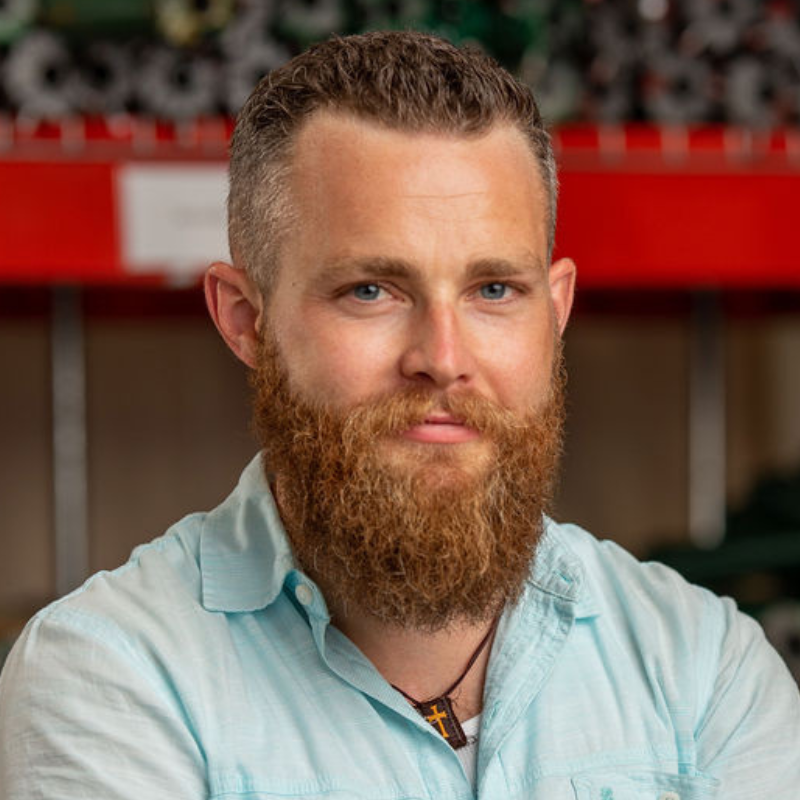
Daniel Egan
Daniel Egan is the founder of Jay Street Consulting. He has over a decade of experience in the home services sector. As part of a fast-growing, institutionally-run platform, he helped lead the business into a nine-figure exit. He has built teams, managed agencies, and learned firsthand what drives enterprise value–and what quietly erodes it.
Operator’s Edge
Selling to PE Without Selling Out
HVAC owners considering a private equity sale can shape the outcome by defining non-negotiables before entering negotiations. Rob Lowry, who sold Philadelphia VRF contractor Pennergy Solutions in July 2024 after 25 years of ownership, made preserving his sales team and their commission plan conditions of the deal. Lowry prioritized finding a buyer who would close quickly and stay out of daily operations, and he checked whether his company could realistically hit the metrics in a multi-year buyout offer before agreeing to one.
His advice to other owners is to visit the offices of companies the potential buyer already owns in order to read the culture firsthand. Lowry still runs Pennergy and says the acquisition strengthened the business without changing it.
Yet Another Subscription: HVAC
A growing number of residential HVAC contractors now offer equipment as a subscription rather than a purchase, charging homeowners a monthly fee that bundles the system, annual maintenance, covered repairs, and in many cases full replacement after a catastrophic failure.
Most programs require nothing upfront, run 10 to 12 years, and target credit scores around 640 or higher. The dealer owns the equipment and is paid shortly after installation is verified, so install revenue arrives on the usual timeline, while service income continues across the term. Because the contractor controls the maintenance schedule, much of that work can be moved into the slower spring and fall months, with annual visits used to surface failing parts before they become emergency calls. Finturf reports roughly 20% of homeowners choose the subscription when it appears alongside cash and traditional financing.
The Deal Sheet
Advantage Services Group acquired Brooks Heating & Air, a Manassas HVAC contractor founded in 2015 by Kenny Brooks, in ASG's first Virginia deal. Brooks retains its brand and management, joining a platform that now spans Oregon, California, Colorado, and Virginia.
APHIX acquired Sunrise of Nashville, a commercial landscaping firm founded in 1980, in its entry into the Nashville metro. Founder Bob Wellerding will continue leading the Nashville market alongside the existing leadership team.
Royalty Roofing, a Six Pillars Partners portfolio company, acquired Rodd Roofing, a fourth-generation contractor in St. Johnsbury, Vermont serving Vermont and New Hampshire. The deal closed June 30. Generational Group advised Rodd, and terms were not disclosed.